Can AI Become the Next Einstein?
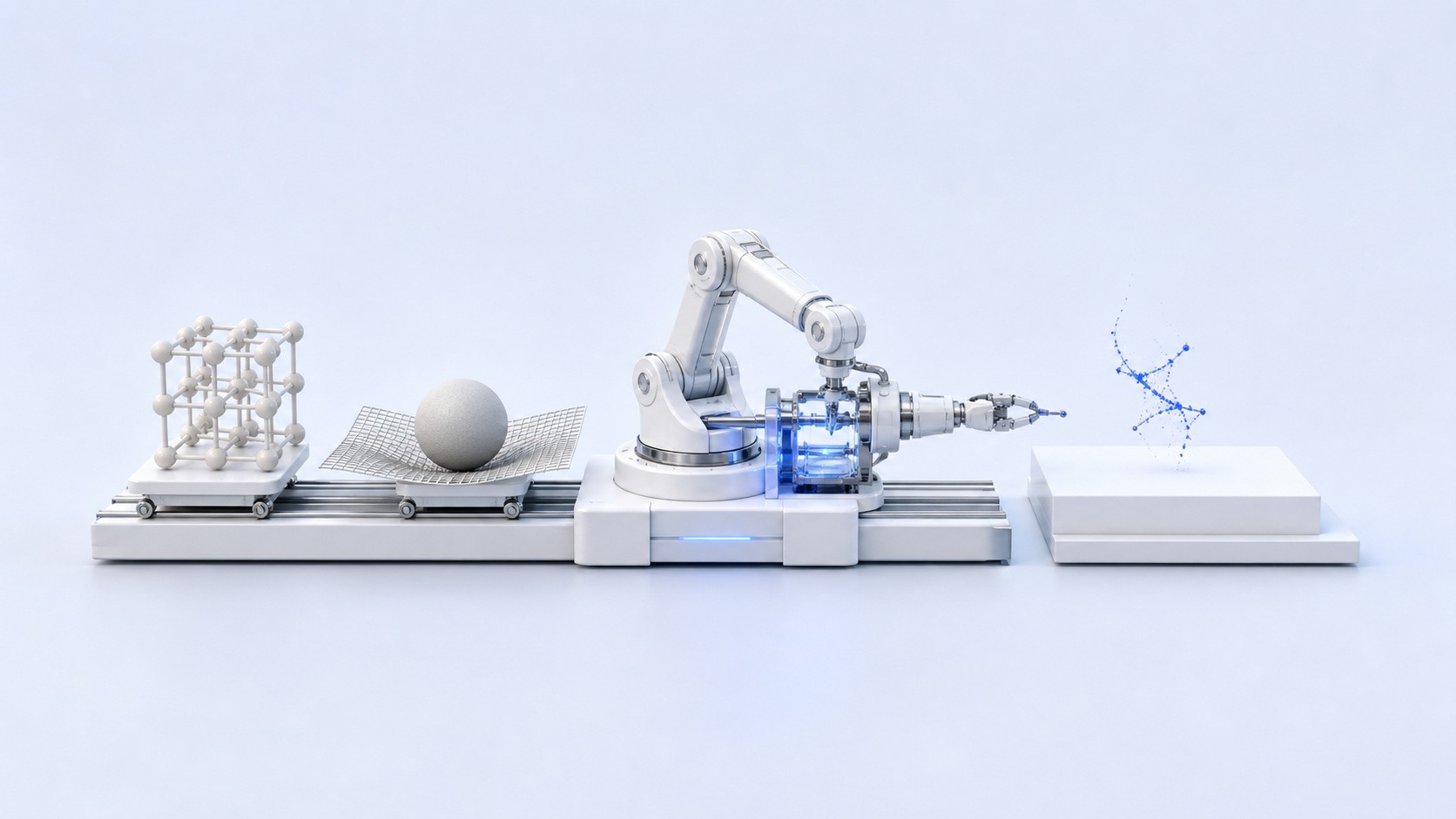
Artificial intelligence has absorbed nearly everything humans have ever written down: published theorems, textbooks, failed proofs, half-finished ideas posted and later abandoned. This entire record sits inside the models researchers query each day, available at a scale no single human mind manages to hold at once. One fact sits behind a blunt question: with access to the full sum of human knowledge, might a machine become the next Einstein or Newton?
Brian Greene, the Columbia University physicist known for his work on string theory, answered the question directly in a conversation on The Diary Of A CEO, hosted by Steven Bartlett: yes, a machine might earn the title. The question arrived with its own case built in: a system holding the entire record of human thought should obviously win the contest. Greene did not dispute the premise. To explain why, he split scientific creativity into three buckets, each harder to fill than the last.
A strong chess player sees more of the board’s legal moves than a casual one does, and picks a stronger move as a result. The same edge defines scientific creativity at its first level: a working scientist spots more of the equations and ideas able to crack a given puzzle than a colleague down the hall does, by holding more options in mind. Machines trained on the full record of human writing start this contest already ahead, holding something close to every equation and paper ever published in view at once. A connection two humans might miss, because neither has read the same combination of papers, sits in plain view for any system already trained on both.
This edge compounds in the next test: combination, joining two ideas nobody had connected before into something new. Breadth alone does not produce this kind of result. The two ideas have to be pulled from different corners of knowledge and forced into contact on purpose. General relativity, Einstein’s breakthrough, came from exactly this kind of join. Riemannian geometry, a mathematics of curved space, gave mathematicians a way to describe warped, curving surfaces. Newton’s older laws described how objects pull on each other through gravity, but only across flat, fixed space. Fusing the two produced a theory of gravity as the bending of space itself, an idea neither field offered alone. Greene argues machines hold an edge in this kind of fusion too. A system trained on every equation and paper humans have produced draws connections between fields no single person would think to compare, because no person has read all of them.
Both tests, though, leave one form of creativity untouched. Something else entirely defines this third form: an idea with no earlier version anywhere, a leap leaving no trail behind. Here the argument turns cautious. A model learns by finding patterns in what has already been written or solved, and a truly unprecedented idea, by definition, carries no pattern for a model to draw from. A system built entirely from what is already known has nowhere to start once nothing already established applies. Radical breaks from the past, Greene says, stay human territory, for now.
Even so, Greene does not treat this divide as permanent. Asked whether a future system might grow into the kind of creativity researchers treat as uniquely human, he answered without hedging: he sees no barrier ahead of such growth, given enough time. He has not watched a machine cross this line yet, and he expects no wall to hold forever. The open question, for him, is timing.
The case remains open. Two of the three buckets once separating human insight from machine output already tilt toward the machine: seeing more of what already exists, and combining existing pieces in new ways. The third, an idea born with no ancestor at all, has not yet come from a system trained entirely on what came before. Whether this divide closes, or holds, is what physicists are now watching for.
Sources
Apple Podcasts, Top Scientist REVEALS: A Kid In The 29th Century Could Have Made This World! | Prof Brian Greene — podcasts.apple.com