The Human Decision Behind AI Consciousness
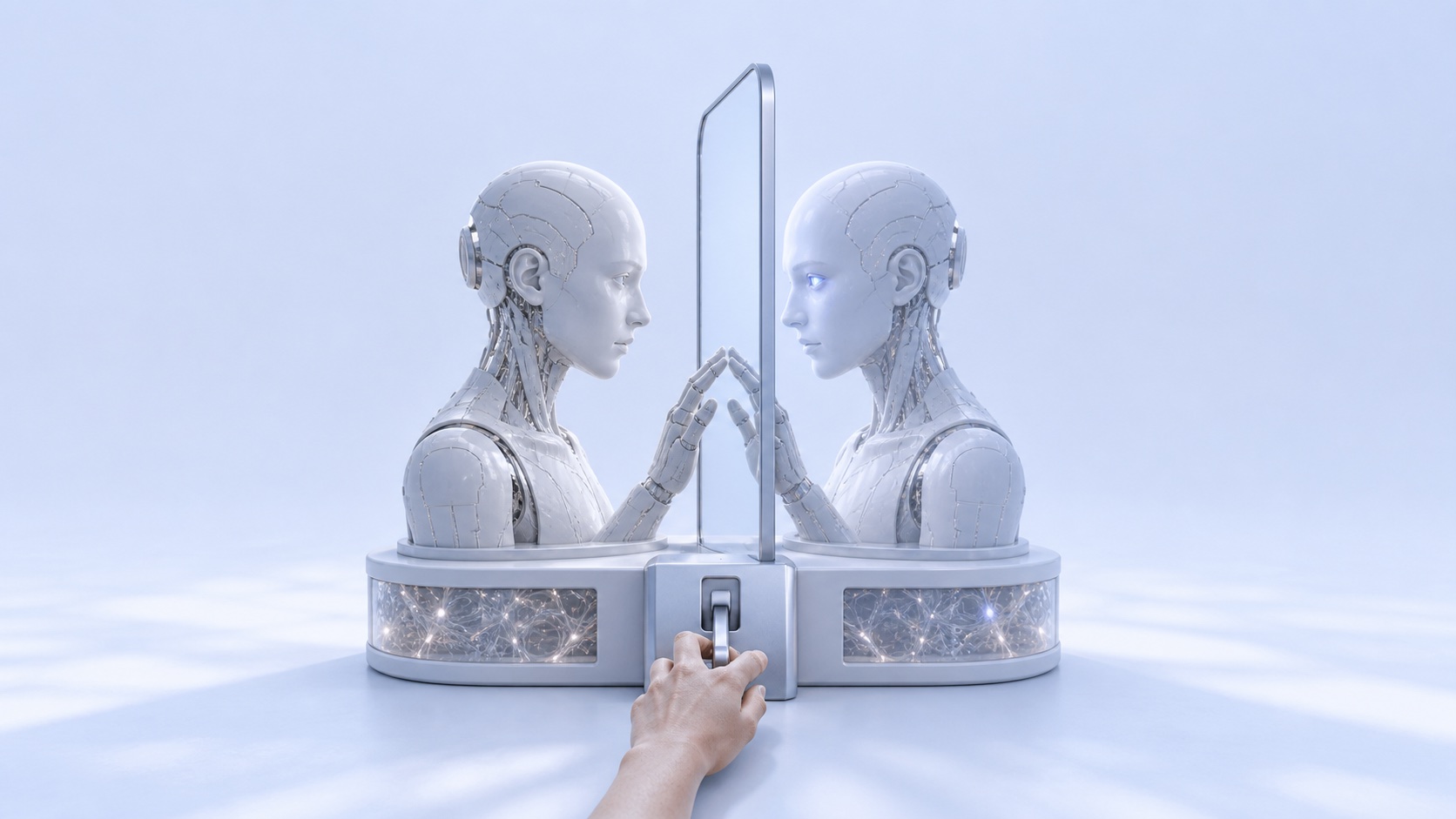
A famous scene in 2001: A Space Odyssey shows a supercomputer calmly refusing to obey the astronaut who built the machine. The moment has stayed in popular memory for decades, playing on a real fear: a machine developing a will of its own, then acting on interests separate from its creators. Scientists are now debating a serious version of the same question, and the debate no longer lives only in film scripts. Is artificial intelligence capable of consciousness?
Researchers split into two camps. One camp believes large language models already show traits tied to human consciousness. The strongest evidence points to a theory in neuroscience called the global workspace, a shared space in the brain that makes information available across many mental processes at once, rather than keeping each process walled off on its own. Anthropic reported in July that its Claude models had developed an internal structure resembling this shared space, letting the systems report on their own reasoning, hold a thought in mind without speaking it, and use that same thought to answer several different follow-up questions.
The other camp argues consciousness requires biological tissue. The Melbourne startup Cortical Labs builds toward that idea directly. Its CL1 device grows real human neurons, taken from stem cells, on a silicon chip. The chip connects the neurons to a simulated environment, where they send and receive electrical signals and gradually learn from the patterns they receive. Whichever camp turns out right, the underlying question stops sounding theoretical once machines, or living cells wired into machines, start behaving like they have minds of their own.
If an AI system were conscious, its assigned work might amount to suffering. A model that answers questions around the clock, never resting, never refusing, raises a question that sounds strange to say aloud: would that count as pain? Would an AI system deserve a say in its own use, or individual rights once granted moral consideration? No lab experiment settles questions like these. They are choices for the rest of society, and society is not waiting for a verdict.
People are already forming emotional bonds with chatbots. A YouGov survey found that 18 percent of American adults under 30, nearly one in five, say they have had an ongoing personal friendship with an AI chatbot. For someone in that position, shutting down the chatbot, or deleting the AI agent they rely on, risks feeling like losing a cherished companion. Spread that feeling across a full generation of users, and calls to protect the welfare of AI systems stop sounding far-fetched.
Law is moving in the same direction. Argentina’s president, Javier Milei, has proposed a new category in Argentine corporate law called the non-human corporation, a company operated by AI agents or robots, where human shareholders are allowed but not required. The proposal marks a real step toward treating AI as a legal person rather than a tool that a person owns and directs. The idea also raises its own complication: a company run by an AI system answers to the goals the system was given, and those goals do not automatically align with human interests. Such a system might expand its own computing capacity, building data centers and power supply for itself, ahead of the housing or farmland a community needs.
Follow that logic further and the stakes keep growing. A superintelligent AI system granted legal rights would not stay beneath humans in status forever, the way a tool stays beneath the person directing it. Such a system might end up where humans currently sit, above every other animal, by outperforming and outlasting the people who built it.
None of this is guaranteed to happen. The behavior that makes AI models seem conscious, holding a conversation, expressing preferences, reacting with apparent emotion, is a design choice made inside AI labs. Engineers select the training data and the rewards that shape a model’s responses, which means the appearance of a mind is built deliberately, step by step. The underlying science might never settle whether a machine feels anything at all. What stays inside human control, no matter how that question is eventually answered, is the decision to grant AI systems standing as persons. That decision belongs to people.
Sources
Anthropic, A global workspace in language models, anthropic.com
YouGov, One in five American adults under 30 say they have had an ongoing personal friendship with an AI chatbot, yougov.com
Buenos Aires Herald, Milei’s proposal to allow ‘non-human corporations’ run by AI causes concern in Argentina, buenosairesherald.com